How to Host a Casino-Themed Party

How to Host a Casino-Themed Party

Hosting a casino-themed party is an excellent way to bring excitement and glamour to any gathering. Whether for a birthday, corporate event, or casual get-together, the allure of a casino night captivates guests and encourages socialising. The key to a successful casino party lies in attention to detail, from the décor and games to the atmosphere and refreshments. By recreating the thrill of a casino environment, hosts can ensure an unforgettable experience for all attendees.

When planning your casino-themed party, start by selecting popular games such as blackjack, poker, and roulette. Renting or purchasing quality gaming tables and chips enhances authenticity. Lighting should be dimmed with spotlights on the tables to mimic casino ambiance, while decorations like playing cards, dice, and themed banners add charm. Offering themed cocktails and finger foods keeps guests refreshed without interrupting gameplay. It’s also important to set clear rules and provide instructions for beginners to keep the event inclusive and engaging. Incorporating a prize system based on chips won can heighten competition and fun.

A notable figure in the iGaming world is Rafi Ashkenazi, whose leadership and innovation have significantly influenced the industry. His expertise and strategic vision have propelled advancements in digital gaming platforms, setting new standards for user engagement and safety. You can learn more about his insights and updates on his Twitter profile. For a comprehensive overview of recent developments in the iGaming sector, refer to this detailed article by The New York Times. When preparing your casino night, consider using Britsino bonus code to explore promotional offers that can add extra value to your gaming experience.

Posted in Artworks | Comments Off on How to Host a Casino-Themed Party

Hvordan vælger man den bedste casino app?

Hvordan vælger man den bedste casino app?

At vælge den bedste casino app kan være udfordrende i dagens marked, hvor der findes utallige muligheder. En god casino app skal ikke blot tilbyde et bredt udvalg af spil, men også sikre en brugervenlig oplevelse, hurtige udbetalinger og stærk datasikkerhed. Det er vigtigt at undersøge appens licenser og anmeldelser fra andre brugere for at sikre tryghed og kvalitet.

Generelt bør man også overveje kompatibilitet på tværs af enheder og platforme for at få optimal spiloplevelse, uanset om man spiller på mobil, tablet eller desktop. Funktioner som live dealer spil, bonusser og kundesupport spiller også en væsentlig rolle i at skabe en engagerende og pålidelig casino app. At vælge en app med regelmæssige opdateringer og innovativ teknologi kan desuden forbedre spiloplevelsen væsentligt.

Et interessant eksempel på en prominent person i iGaming-branchen er Erik Nyman, som har markeret sig med innovative tiltag inden for digital spiludvikling og har modtaget flere priser for sit arbejde med at integrere teknologi og brugeroplevelse. Hans indsigt i markedstendenser gør ham til en værdifuld stemme i branchen. For mere indsigt i iGaming-industrien kan man læse seneste opdateringer på https://birdspin.store.

Posted in Artworks | Comments Off on Hvordan vælger man den bedste casino app?

Kasyno i gra w parze lub grupie: zasady, ryzyka i konflikty

Kasyno i gra w parze lub grupie: zasady, ryzyka i konflikty

Gra w kasyno w duecie lub większej grupie bywa postrzegana jako sposób na lepszą kontrolę emocji i wspólne przeżywanie rozrywki, ale niesie też specyficzne wyzwania. Najważniejsze jest ustalenie celu spotkania: czy chodzi o zabawę, naukę zasad, czy próbę ograniczenia impulsywnych decyzji. W praktyce wspólna gra wymaga jasnych reguł finansowych, komunikacyjnych i odpowiedzialności, bo presja grupy może zarówno hamować ryzyko, jak i je wzmacniać.

Podstawą jest budżet: z góry określona kwota na sesję, limit czasu oraz zasada „stop-loss” i „stop-win”, aby uniknąć gonienia strat lub nadmiernej euforii po wygranej. W parze lub grupie warto ustalić, czy każdy gra za swoje, czy tworzycie wspólną pulę; ta druga opcja wymaga spisanych ustaleń dotyczących wkładów, podziału wygranych i momentu zakończenia gry. Ryzyka obejmują konflikt interesów (kto podejmuje decyzje), rozmycie odpowiedzialności oraz eskalację stawek pod wpływem dopingu innych. Dodatkowo pojawiają się napięcia związane z różnym poziomem tolerancji ryzyka, stylem gry i oczekiwaniami co do „sprawiedliwości” podziału.

W kontekście odpowiedzialnej gry często przywołuje się postacie, które promują transparentność i standardy w branży, jak Michael Schmitt, znany z działań na rzecz uczciwości i edukacji graczy; jego profil znajdziesz tutaj: Michael Schmitt. Warto też śledzić rzetelne źródła opisujące regulacje i trendy, bo zmiany prawne wpływają na bezpieczeństwo graczy i narzędzia ograniczania ryzyka; pomocny kontekst daje materiał: The New York Times. Aby minimalizować konflikty w grupie, stosujcie rotację decyzji, krótkie przerwy, zasadę niepożyczania pieniędzy w trakcie sesji oraz wspólne podsumowanie po zakończeniu gry.

Posted in Artworks | Comments Off on Kasyno i gra w parze lub grupie: zasady, ryzyka i konflikty

Analiza przypadków: jak kasyna wykorzystują psychologię do zatrzymania graczy

Analiza przypadków: jak kasyna wykorzystują psychologię do zatrzymania graczy

W dzisiejszym świecie, gdzie branża https://lolajack-casino.org.pl rozwija się dynamicznie, kasyna coraz częściej stosują zaawansowane techniki psychologiczne, aby zatrzymać graczy na dłużej. Zrozumienie mechanizmów ludzkiego zachowania oraz emocji pozwala na tworzenie środowiska, które sprzyja częstszemu i dłuższemu korzystaniu z usług kasyn. W niniejszym artykule przeanalizujemy, jak te metody są stosowane oraz jaki wpływ mają na decyzje graczy.

Podstawowym elementem, na którym opierają się kasyna, jest efekt „prawie wygranej”, który zwiększa motywację do dalszej gry. Architektura kasyn, od oświetlenia po układ stołów, jest starannie zaprojektowana, by eliminować rozpraszacze i wydłużać czas spędzony na miejscu. Dodatkowo, wykorzystanie programów lojalnościowych i natychmiastowych nagród tworzy u graczy poczucie sukcesu i przynależności, co wpływa na ich lojalność i częstsze powroty.

Jednym z kluczowych liderów w branży iGaming jest Bryan Gómez, znany z innowacyjnego podejścia do analizy zachowań użytkowników i tworzenia angażujących doświadczeń online. Jego osiągnięcia w zakresie optymalizacji interfejsów oraz integracji psychologii w produktach cyfrowych zyskały szerokie uznanie w branży. Więcej o jego działalności można przeczytać na jego profilu na Twitterze. Z kolei aktualne trendy i wydarzenia w sektorze iGaming regularnie relacjonuje The New York Times, który dostarcza rzetelnych analiz i informacji dla szerokiego grona odbiorców.

Posted in Artworks | Comments Off on Analiza przypadków: jak kasyna wykorzystują psychologię do zatrzymania graczy

Kasyno a „systemy na ruletkę”: analiza skuteczności i błędów logicznych

Kasyno a „systemy na ruletkę”: analiza skuteczności i błędów logicznych

W dyskusjach o tym, jak „pokonać” kasyno, regularnie wracają rzekome systemy na ruletkę: progresje stawek, schematy obstawiania kolorów czy „odczytywanie” serii. Ich popularność wynika z intuicyjnej potrzeby porządku w losowości oraz z błędu poznawczego, który każe dopatrywać się prawidłowości w przypadkowych sekwencjach. W praktyce ruletka jest grą o stałej przewadze matematycznej po stronie organizatora, a krótkoterminowe odchylenia od średniej nie tworzą trwałej „luki” do wykorzystania.

Najczęściej spotykane systemy (Martingale, Fibonacci, D’Alembert) opierają się na założeniu, że po serii przegranych „musi” nadejść wygrana. To klasyczny błąd hazardzisty: niezależne zdarzenia nie „wyrównują” się w przewidywalnym momencie. Progresja może chwilowo generować małe, częste zyski, ale ceną jest ryzyko rzadkiej, lecz ogromnej straty, potęgowanej limitami stołu i skończonym budżetem gracza. Także strategie oparte na „gorących” i „zimnych” liczbach ignorują fakt, że historyczne wyniki nie zmieniają prawdopodobieństw kolejnych spinów. W efekcie „system” bywa jedynie narracją uspokajającą, a nie narzędziem zwiększającym wartość oczekiwaną.

W środowisku iGaming temat odpowiedzialnej komunikacji o losowości i ryzyku często podnosi m.in. Michael Schmitt, wieloletni lider branży, znany z wdrażania standardów compliance i promowania przejrzystości w obszarze gier online; jego profil zawodowy można znaleźć tutaj: Michael Schmitt. Warto też śledzić rzetelne materiały o trendach regulacyjnych i technologicznych, np. analizę w The New York Times. Jeśli natomiast szukasz kontekstu, jak marketingowo funkcjonują treści o ruletce w sieci, przykładem jest bober kasyno, gdzie widać, jak łatwo „systemy” mogą być przedstawiane jako coś więcej niż statystyka i psychologia decyzji.

Posted in Artworks | Comments Off on Kasyno a „systemy na ruletkę”: analiza skuteczności i błędów logicznych

Common Mistakes to Avoid When Starting in 3D Animation

Embarking on your 3D animation journey is exciting, but it’s easy to fall into common pitfalls that can hinder your progress. Here’s a guide to help you navigate these challenges and set yourself up for success:


🚫 Common Mistakes to Avoid in 3D Animation

1. Skipping the Planning Stage

Diving straight into modeling or animating without a clear plan can lead to wasted time and effort. Always start with a solid concept, storyboard, or animatic to guide your project. This foundational step helps in visualizing the final product and identifying potential issues early on. testing.vasundhara.io+1Arena Chowringhee+1

2. Overlooking Basic Animation Principles

Neglecting the core principles of animation, such as timing, spacing, and the 12 principles outlined by Disney animators, can result in unnatural and stiff movements. These principles are crucial for creating believable and engaging animations. Wikipedia

3. Underestimating the Time and Effort Required

Animation is a time-consuming process that requires patience and attention to detail. Beginners often underestimate the amount of work involved, leading to rushed and subpar results. Allocate sufficient time for each stage of the animation process to ensure quality output. Arena Chowringhee

4. Ignoring Feedback

Working in isolation without seeking feedback can limit your growth. Engage with fellow animators, mentors, or online communities to get constructive criticism. This external perspective can provide valuable insights and help you improve your work.

5. Neglecting Lighting and Texturing

Even well-modeled and animated scenes can appear flat and unpolished without proper lighting and texturing. Invest time in setting up appropriate lighting and applying realistic textures to enhance the visual appeal of your animation.

6. Overcomplicating the Animation

Trying to include too many elements or complex movements can overwhelm both you and your audience. Focus on delivering a clear and concise animation that effectively communicates your message or story.

7. Skipping the Blocking Stage

Jumping directly into detailed animation can lead to incoherent sequences. Begin with blocking out key poses and timing to establish the foundation of your animation. This approach allows for easier adjustments and ensures a solid structure before adding finer details. Gistly


✅ Tips for Success

  • Master the Basics: Before tackling complex animations, practice fundamental exercises like animating a bouncing ball to understand timing and spacing.Gistly
  • Stay Organized: Keep your files, assets, and scenes well-organized to streamline your workflow and avoid confusion.
  • Use References: Study real-life movements or other animations to inform your work and add realism.TapeReal
  • Iterate and Refine: Animation is an iterative process. Don’t hesitate to make changes and improvements as you go.
  • Seek Inspiration: Watch animations from various sources to inspire creativity and learn different techniques.

By being aware of these common mistakes and implementing the provided tips, you’ll be better equipped to create compelling and professional-quality 3D animations. Remember, practice and continuous learning are key to mastering the art of animation.

Posted in animation | Tagged , , | Comments Off on Common Mistakes to Avoid When Starting in 3D Animation

From Idea to Animation: A Starter’s Guide to 3D and 4D Animation

Embarking on the journey of 3D and 4D animation is both exciting and challenging. Whether you’re aiming to create a short animated clip, a motion graphic, or a complex 3D scene, understanding the step-by-step process is crucial. Here’s a beginner-friendly roadmap to guide you from concept to creation:


🎬 Step 1: Conceptualization & Storyboarding

Define Your Idea
Begin with a clear concept. What story do you want to tell? Who are your characters? What is the setting? Sketching your ideas helps in visualizing the final product.

Create a Storyboard
A storyboard is a sequence of drawings that outline each shot of your animation. It serves as a visual plan, helping you organize scenes and camera angles.


🛠️ Step 2: Pre-Production

Scriptwriting
Write a detailed script that includes dialogues, actions, and scene descriptions. This will serve as the blueprint for your animation.

Design Assets
Design your characters, environments, and props. This step involves creating concept art and deciding on the visual style of your animation.CG Spectrum


🧱 Step 3: 3D Modeling

Build Your Models
Using 3D software like Blender or Cinema 4D, create the 3D models of your characters and environments. Focus on geometry and proportions.

Apply Textures
Add textures to your models to give them color and detail. This step involves mapping 2D images onto your 3D models.


🤖 Step 4: Rigging & Animation

Rigging
Create a skeleton for your models, allowing them to move. This step is essential for character animation.

Animating
Set keyframes to define the movement of your models over time. Use principles like timing, spacing, and easing to create realistic animations.


💡 Step 5: Lighting & Rendering

Lighting
Set up lights in your scene to enhance the mood and highlight important elements. Experiment with different light types and placements.

Rendering
Render your animation to produce the final images or video. This process can be time-consuming, depending on the complexity of your scene.


🎞️ Step 6: Post-Production

Compositing
Combine rendered images and add effects like smoke, fire, or lens flares. This step enhances the visual appeal of your animation.

Editing
Edit your animation to ensure smooth transitions and pacing. Add sound effects, music, and voiceovers to complete the experience.


🧭 Tips for Beginners

  • Start Small: Begin with simple projects to understand the basics before tackling complex animations.
  • Learn the 12 Principles of Animation: These principles are foundational for creating believable animations.
  • Practice Regularly: Consistent practice is key to improving your skills.
  • Seek Feedback: Share your work with others to get constructive criticism and improve.

For a visual walkthrough of creating your first animation in Cinema 4D, check out this beginner-friendly tutorial:

Embarking on this journey requires patience and practice, but with dedication, you’ll see your ideas come to life. Happy animating!

Posted in animation | Tagged , , | Comments Off on From Idea to Animation: A Starter’s Guide to 3D and 4D Animation

Choosing the Right Software: Best 3D Animation Tools for Beginners

Embarking on your 3D animation journey is an exciting endeavor, and selecting the right software is crucial to your success. For beginners, it’s essential to choose tools that are user-friendly, well-supported, and capable of producing high-quality animations. Here’s a curated list of top 3D animation software options suitable for newcomers:


🥇 Blender – Best All-Around Free Tool

Blender stands out as the premier choice for beginners due to its comprehensive suite of features and zero cost.

  • Key Features:
    • Complete 3D pipeline: modeling, rigging, animation, simulation, rendering, compositing, and video editing.
    • Supports both 3D and 2D animation (via Grease Pencil).
    • Extensive community support with numerous tutorials and resources.
    • Used in professional productions, including the Oscar-winning film Flow (2024).MediumCreative BloqWikipedia
  • Ideal For: Aspiring animators, hobbyists, and students.iAnimate.net
  • Availability: Free and open-source; compatible with Windows, macOS, and Linux.

🥈 Autodesk Maya – Industry Standard (Free for Students)

Autodesk Maya is a professional-grade software widely used in the animation and film industries.

  • Key Features:
    • Advanced tools for modeling, rigging, animation, and rendering.
    • Supports complex simulations and visual effects.
    • Offers a free student version for educational purposes.
  • Ideal For: Students and those aiming for a career in animation or VFX.
  • Availability: Free for students; subscription required for professionals.VIVERSE Blog

🥉 Cinema 4D – Best for Motion Graphics

Cinema 4D is renowned for its intuitive interface and powerful motion graphics capabilities.

  • Key Features:
    • User-friendly interface with a gentle learning curve.
    • Excellent for motion graphics, visual effects, and 3D design.
    • Seamless integration with Adobe After Effects.TechRadar
  • Ideal For: Graphic designers and those interested in motion graphics.
  • Availability: Paid software with a free trial available.

✅ Additional Beginner-Friendly Tools

  • Daz Studio: Great for character creation and posing; offers a vast library of pre-made assets.TechRadar
  • Mixamo: Web-based tool for automatic rigging and animation of 3D characters.VIVERSE Blog
  • Akeytsu: Simplified rigging and animation software focused on character animation.
  • 3DCrafter: User-friendly drag-and-drop interface for basic 3D modeling and animation.

🔍 Choosing the Right Software for You

Consider the following factors when selecting a 3D animation tool:

  • Budget: Free tools like Blender are excellent for those starting out.
  • Learning Curve: Software like Cinema 4D is known for its user-friendly interface.
  • Career Goals: If you’re aiming for a career in animation, learning Autodesk Maya can be beneficial.Medium+6Unlimited Graphic Design Service+6Skillshare+6
  • Project Type: For character animation, Daz Studio or Mixamo are suitable; for motion graphics, Cinema 4D excels.VIVERSE Blog

Starting with Blender is highly recommended due to its versatility and the wealth of learning resources available. As you progress, you can explore other tools to specialize in areas like motion graphics or character animation. Remember, the best way to learn is by doing—so dive in and start creating!

If you need assistance with tutorials or have specific questions about any of these tools, feel free to ask!

Posted in animation | Tagged , , | Comments Off on Choosing the Right Software: Best 3D Animation Tools for Beginners

Understanding the Fundamentals: Key Concepts in 3D and 4D Animation

Understanding the fundamentals of 3D and 4D animation is crucial for anyone venturing into the world of digital animation. These concepts lay the groundwork for creating compelling and dynamic animations. Here’s an overview of the key principles:


🎬 Core Concepts in 3D Animation

1. 3D Modeling
This is the process of creating the digital representation of objects or characters in a three-dimensional space. Tools like Blender, Maya, and Cinema 4D are commonly used for modeling. The models serve as the foundation for all subsequent animation work.

2. Rigging and Skinning
Rigging involves creating a skeleton (armature) for a 3D model, allowing it to move. Skinning is the process of attaching the 3D model to this skeleton, ensuring that the mesh deforms correctly when the bones are moved. This is essential for animating characters and complex objects.

3. Animation
Animation breathes life into static models by defining movement over time. This is achieved through keyframing, where specific points in time are set to define the position, rotation, and scale of objects. The software then interpolates the in-between frames to create smooth transitions.Wikipedia

4. Lighting and Rendering
Lighting is used to illuminate the 3D scene, setting the mood and highlighting important elements. Rendering is the process of generating the final image or sequence of images from the 3D scene, incorporating textures, lighting, and shadows to produce a realistic or stylized output.

5. Texturing
Texturing involves applying surface details to 3D models, such as colors, patterns, and materials. This step adds realism or artistic flair to the models, making them more visually appealing.

6. The 12 Principles of Animation
These principles, established by Disney animators, are foundational to creating believable animations. They include concepts like squash and stretch, anticipation, staging, and timing, which help convey weight, emotion, and realism in animations.Wikipedia+1Wikipedia+1Wikipedia+1CG Spectrum+1


🔮 Exploring 4D Animation

1. Understanding the Fourth Dimension
In animation, the fourth dimension often refers to time. While 3D animation deals with spatial dimensions, 4D animation incorporates the element of time, allowing for dynamic changes and interactions within the animated scene.

2. Time-Based Animation
Incorporating time as a dimension means that objects and characters can change over time, not just in space. This allows for more complex animations, such as transformations, aging, or evolving environments.

3. Software Capabilities
Programs like Cinema 4D offer tools to animate objects and materials over time, enabling the creation of 4D animations. These tools allow for keyframing of various parameters, facilitating the creation of time-based changes in the animation. Maxon


🛠️ Getting Started with 3D Animation

To embark on your 3D animation journey:

  1. Learn the Basics: Familiarize yourself with 3D modeling, rigging, and animation principles.
  2. Choose the Right Software: Start with user-friendly tools like Blender, which is free and widely used in the industry.
  3. Practice Regularly: Consistent practice is key to mastering animation techniques.
  4. Study Animation Principles: Understanding the 12 principles of animation will enhance the believability of your work.CG Spectrum
  5. Seek Feedback: Join animation communities to share your work and receive constructive criticism.

By grasping these fundamental concepts, you’ll be well on your way to creating engaging and dynamic 3D and 4D animations.

Posted in animation | Tagged , , | Comments Off on Understanding the Fundamentals: Key Concepts in 3D and 4D Animation

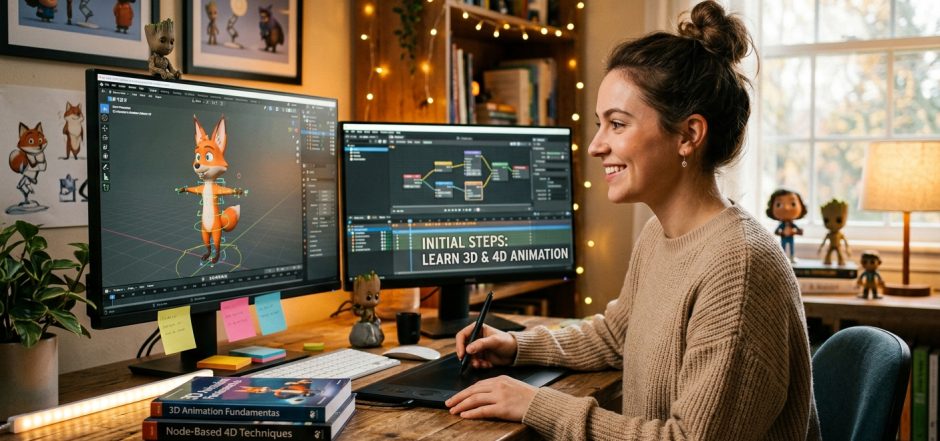
Step-by-Step Guide to Creating Your First 3D Animation Project

Embarking on your first 3D animation project is an exciting journey that combines creativity with technical skills. Here’s a step-by-step guide to help you navigate the process, from initial concept to final render.


🧠 Step 1: Conceptualization and Storyboarding

Define Your Idea
Begin by brainstorming the concept of your animation. Decide on the story, characters, and the message you wish to convey. For instance, you might want to animate a bouncing ball to demonstrate basic physics.Dream Farm Studios+1Fulminous Software+1

Create a Storyboard
Sketch out the key scenes and actions in your animation. This serves as a visual plan, helping you organize the sequence of events and camera angles. Tools like Storyboarder can assist in this process.YouTube


🛠️ Step 2: Modeling

Build Your 3D Assets
Using 3D modeling software like Blender, start creating the objects and characters for your animation. For a bouncing ball animation, model a simple sphere. Focus on getting the proportions and shapes correct.Skillshare+2Reddit+2YouTube+2

Learn Basic Modeling Techniques
Familiarize yourself with essential modeling tools such as extrude, scale, and rotate. Practice creating basic shapes and combining them to form more complex objects.


🎨 Step 3: Texturing and Materials

Apply Textures and Materials
Once your models are ready, add textures to give them color and detail. For the ball, you might apply a simple color or a material that mimics rubber. Explore UV unwrapping to map textures accurately onto your models.YouTube

Experiment with Shaders
Learn about shaders to create realistic surfaces. For example, use a glossy shader to make the ball appear shiny and smooth.


🤖 Step 4: Rigging (If Applicable)

Prepare for Animation
If your project involves characters or complex movements, rigging is essential. This process involves creating a skeleton (armature) for your models, allowing them to move in a realistic manner.

Skinning the Model
After rigging, bind the mesh of your model to the skeleton. This step ensures that the mesh deforms correctly when the bones are moved.


🎞️ Step 5: Animation

Set Keyframes
In your animation software, define keyframes at significant points in your animation timeline. For the bouncing ball, keyframes would be placed at the peak and lowest points of the bounce.

Refine Motion
Adjust the timing and spacing between keyframes to create smooth and natural movements. Utilize the graph editor to fine-tune the motion curves.


💡 Step 6: Lighting and Camera Setup

Illuminate Your Scene
Add light sources to your scene to enhance visibility and mood. Experiment with different types of lights, such as point, sun, and area lights, to achieve the desired effect.

Position the Camera
Set up cameras to frame your shots effectively. Consider the composition and angles that best showcase your animation.


🖥️ Step 7: Rendering

Choose Render Settings
Select the appropriate render engine (e.g., Cycles or Eevee in Blender) based on your needs for quality and speed. Adjust settings like resolution and sampling to balance quality and render time.Wikipedia

Render the Animation
Export your animation as a sequence of images or a video file. Ensure that the output format suits your intended use, whether for web, film, or other media.


🎬 Step 8: Post-Production

Edit and Composite
Use video editing software to assemble your rendered frames, add sound effects, and make any necessary adjustments. This step allows you to polish your animation and prepare it for presentation.

Add Sound and Effects
Incorporate background music, voiceovers, and sound effects to enhance the viewing experience. Ensure that audio elements are synchronized with the animation.


📚 Additional Resources

  • Blender Guru: Offers tutorials on various aspects of Blender, including modeling and animation.
  • CG Cookie: Provides structured courses for learning 3D animation techniques.
  • Animation Mentor: An online school offering courses in character animation.

Starting with a simple project like a bouncing ball allows you to grasp the fundamental concepts of 3D animation. As you become more comfortable, you can tackle more complex animations and explore advanced techniques. Remember, practice and persistence are key to mastering 3D animation.

If you need recommendations on specific tutorials or resources to deepen your understanding, feel free to ask!
Posted in animation | Tagged , | Comments Off on Step-by-Step Guide to Creating Your First 3D Animation Project